








Sports have always been a part of Alex Bohl’s life. He attended his first sporting event at just eight months old, and grew up in a household where multiple games played on different TVs at the same time. What he didn’t expect, however, was that his career would eventually merge this passion with another interest he found along the way: data.
Alex has built a career at the intersection of sports and analytics, using data science to help protect athletes and promote fairness in competition. By completing the University of Wisconsin Master of Science in Data Science program, his education has played a major role in helping him bridge the gap between his interests and career goals.
Discovering a Passion for Data
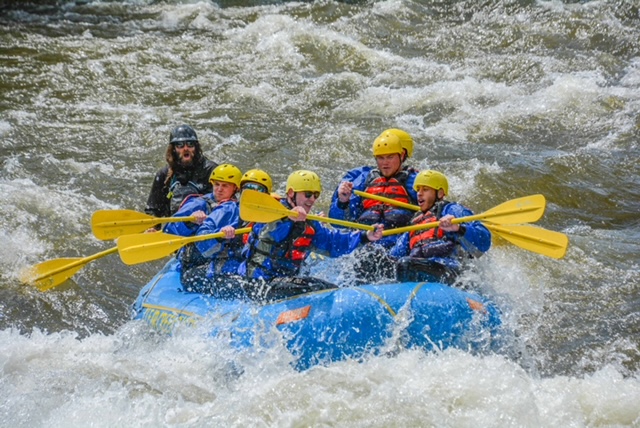
Originally from North Carolina, Alex went to the University of Colorado Colorado Springs (UCCS) for his undergraduate degree. There, he studied sport management with a minor in statistics, an intentional combination that reflected both of his interests.
Colorado Springs is known as Olympic City, USA, as it’s home to many national governing bodies and the US Olympic and Paralympic Committee headquarters. While at UCCS, Alex was surrounded by opportunities to engage with the sports world in meaningful ways. During his senior year, he secured an internship with the United States Anti-Doping Agency (USADA), the organization responsible for protecting clean sport in Olympic and Paralympic competition.
As an intern, Alex helped give presentations to athletes and worked with teams engaging in data-related projects. He quickly learned that data analyst roles required programming experience, so he began teaching himself SQL, Python, and R. Realizing he needed guidance and more structure in his learning, he considered getting a master’s degree to build a stronger foundation and propel his career forward.
“This is the field that I wanted to stay in,” he said. “I loved being able to look at the data to answer questions, tell stories, and find insights that aren’t able to be seen by the naked eye. That really intrigued me, and so that’s what started the search of going back to school, and looking into the program at UW.”
Why UW Data Science?
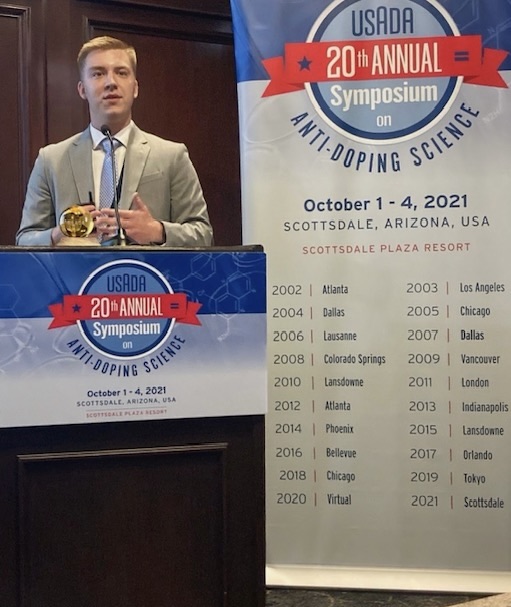
Alex had a clear set of priorities while researching graduate programs. After becoming an analytics and reporting program lead at USADA, he wanted to continue working full-time while earning his degree. He also looked for a program that balanced affordability with strong, relevant coursework. For Alex, the 100 percent online UW Data Science program checked all of these boxes.
Beyond that, the curriculum aligned closely with his goals. Courses in machine learning, programming, and big data allowed him to deepen his technical expertise. Other areas, like data ethics and communication, helped develop his durable skills by learning the best ways to present data visualizations and reports to different audiences.
Learning By Doing
Throughout the program, Alex appreciated the balance between structure and flexibility. Many assignments allowed him to explore datasets and topics that interested him personally, making the experience both practical and engaging.
One of the most impactful parts of the program for Alex was the capstone project, which gave him the chance to apply what he learned in a real-world setting. Having received tuition reimbursement from USADA, Alex used his employer as a capstone site to give back to the organization.
“I appreciated the capstone and being able to tie in everything that I’ve learned into one massive project,” he said. “I think that’s what gravitated me towards the program at the University of Wisconsin.”
Building Community While Online
Although transitioning from in-person undergraduate classes to a fully online format took some getting used to, Alex found that the program offered strong opportunities to connect with his instructors.
“You can have a relationship with the professors and you have a lot of avenues to reach out and have that connection that you would get a little bit easier in face-to-face,” he said. “The way it’s set up, everyone does a great job at making sure that that is not something that is missed in the online space.”
Over time, those interactions helped create a sense of community with classmates as well. Alex enjoyed “seeing a familiar face, a familiar name, and being able to engage with them over time as people go through the program. Especially in the capstone, you get to see all of your peers doing really cool things.”

Get Program Guide
Learn more about our 100% online degree and certificate programs.
Turning Skills into Impact
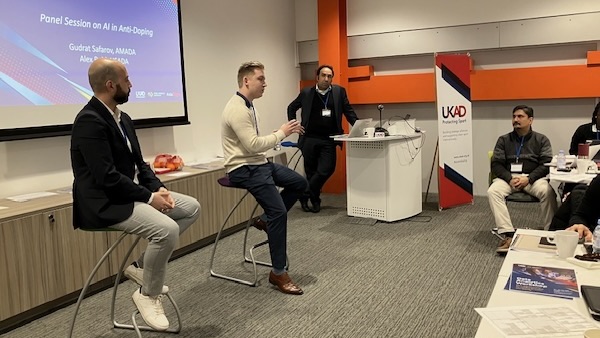
Having learned new technical skills, Alex has been able to take what he’s learned in the program and use it in his work at USADA.
His responsibilities have spanned data visualization, data engineering, and advanced analytics, and he’s played a role in leveraging data to support clean sport. With access to diverse datasets like athlete performances, biological data, and operational metrics, Alex has worked on projects that directly impact fairness in competition.
“That’s the holy grail of anti-doping,” he said. “It’s a challenge, but it’s a really fun challenge. Every time I clock in, I’ve got this list of projects that I think would be a lot of fun.”
The skills he developed in the master’s degree program have been essential in this role, not just technically, but also in terms of his confidence over time.
“I was writing this in 20 lines of code, and now I could do it in two,” he said. “Even that was within the first semester of seeing how quick skills can improve.”
After six years at USADA, Alex transitioned into a data analyst role with the Larimer County Sheriff’s Office in Colorado, where he continues to apply the technical and analytical skills he acquired in the UW Data Science program. He also remains connected to USADA as a data consultant.
Advice for Future Students

For those considering the master’s degree program, Alex recommends setting a schedule and creating a space at home with little distraction where you can dive into coursework. He also encourages students to embrace the rigor and challenge of the program.
“Some of the best work I did and the best skills I learned was from saying ‘OK, I could do it this way. But what if I took it a little step further and tried out this new thing and learned this new skill?’ When I made that decision, that’s when I tended to learn the most,” he said.
Most importantly, Alex hopes students who return to school also take pride in their academic journey:
“That’s something I get to hang my hat on, knowing I did that. I took that challenge. I put in a lot of time and effort and made sacrifices. But at the end of it, I’m proud of myself. I put in the work, and I get to come out with a degree and a bunch of experience and new skills.”
UW Data Science is a collaboration of six UWs. Alex earned his degree through UW-La Crosse.
Want to learn more about the University of Wisconsin Master of Science in Data Science? Talk with an enrollment adviser at 608-800-6762 or learn@uwex.wisconsin.edu.