





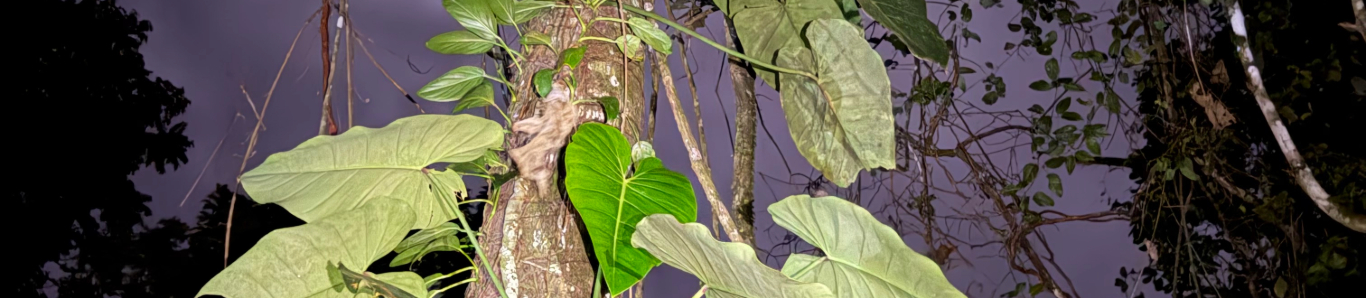


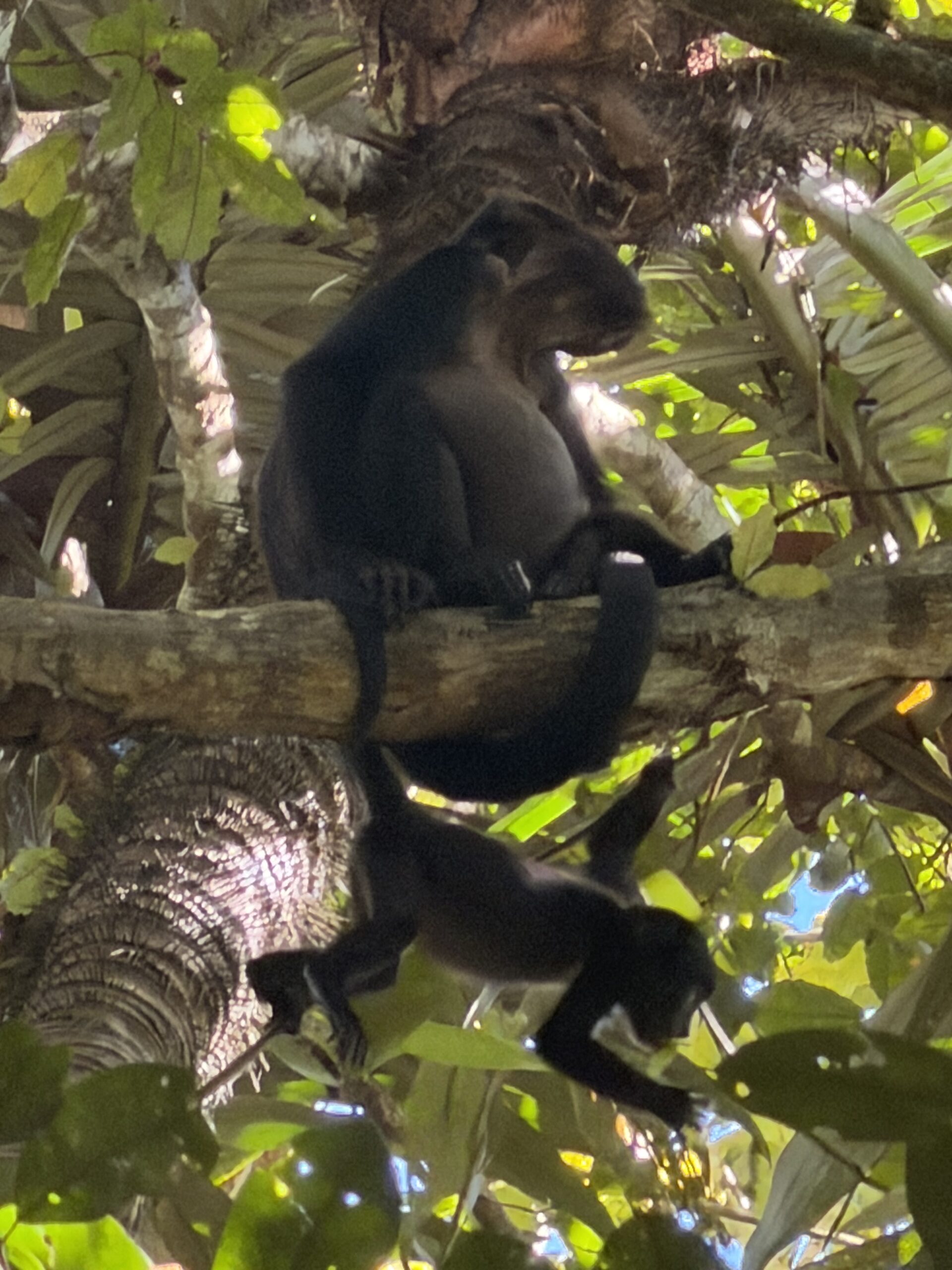
 Emily Madigan, a Master of Science: Biodiversity Conservation and Management student, spent her Christmas break doing the opposite of what most of her native Michiganders do. Instead of bundling up to brave the snow or spending her vacation days sleeping in, Emily was immersed in a tropical experience in Panama where she got very little sleep – but spent her days snorkeling, hiking, and photographing a variety of animals.
Emily’s trip was part of an annual group of UW-Green Bay students and faculty who travel to Panama to participate in research projects in collaboration with the Smithsonian Tropical Research Institute.
“The trip was awesome. I can’t say enough great things about it,” Emily says. “I’ve been able to use those specific experiences from just those 13 days in a lot of papers that I’m writing, a lot of my discussion posts. Just drawing from those experiences that I had within such a small amount of time has been really helpful.”
“If I ever had to write a paper on toucan conservation, I could say, well, I saw toucans, or sloths or just being able to have that kind of firsthand experience seeing those animals,” she adds. “And then also being able to come home and read about them and write further about my experiences and reconnect that to conservation has been really awesome.”
Emily left for Panama the day after Christmas last year, returning in early January. She was accompanied by a group of students with a variety of degree backgrounds, and several professors. The trip was split into three parts. The first was in Boca del Toro.
“We were in the water (snorkeling) every single day, basically all day,” Emily says. “We went to different reefs and used past students’ data and compared what we were collecting to the data that they had collected. It’s an ongoing temporal study of how these reefs and how these specific locations are changing. And then we had to think about what may be causing these changes.”
During the second part, students went to the cloud forests in El Valle de Antón.
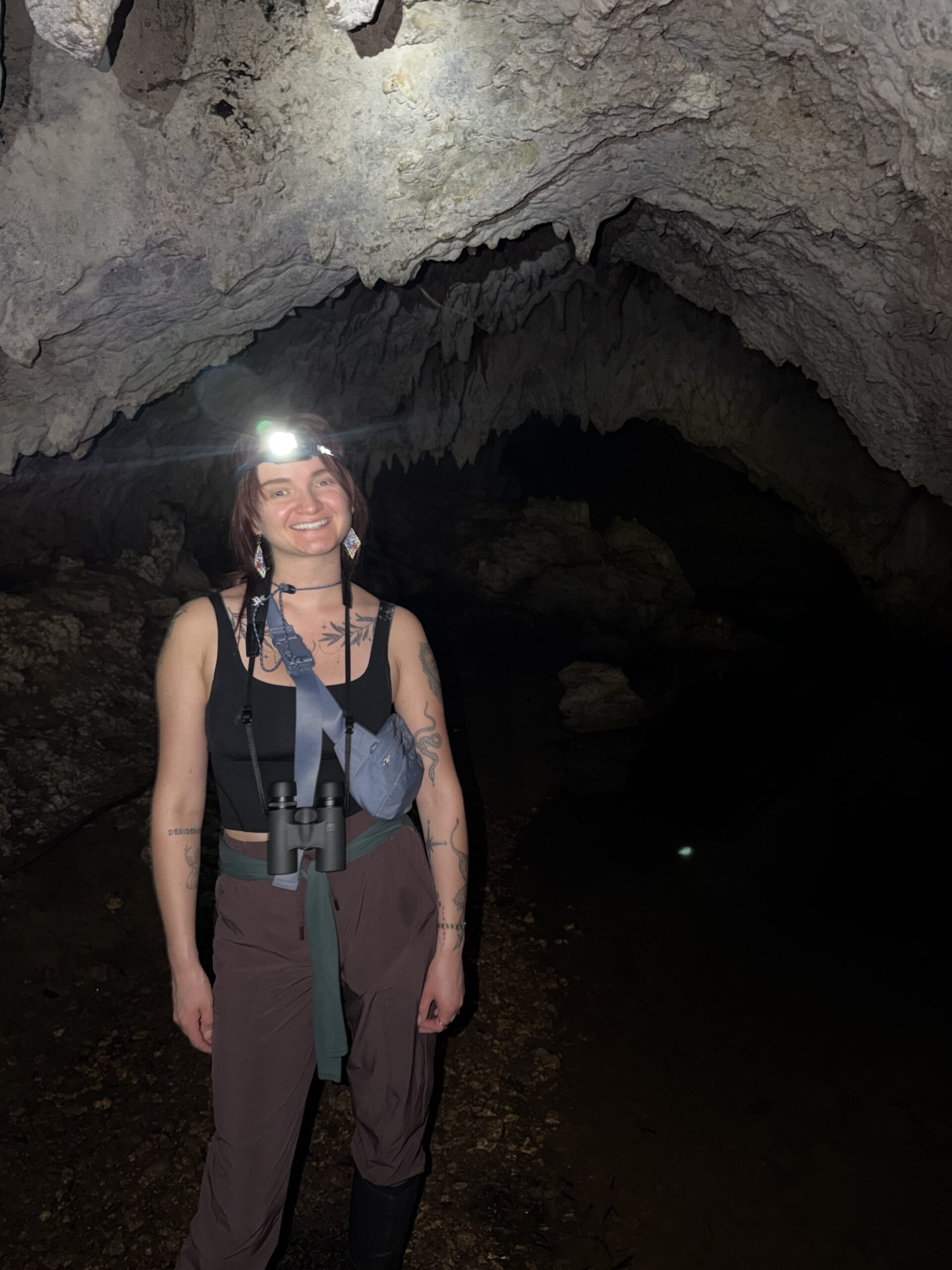 “We went from sea level in the sea to way up in the mountains within a day,” Emily notes. She hiked with her fellow students and Dr. Kier Wefferling to study plants, moss and lichens. They also collected tree samples along the way to analyze the effects of altitude.
The final part of the trip took place at Barro Colorado Island, a tropical island center within the Panama Canal used specifically for research. This was Emily’s favorite part of the trip because she was able to see so many animals, including monkeys, crocodiles, snakes, bats, and much more.
One of the strengths of the Panama experience was the ability to see a variety of plants and animals, with a diverse group of students who could offer different perspectives.
“There was so much biodiversity there that I don’t think it would have been fair for [the professors] to have us focus on just one species – but we did do a lot of night hiking because there are so many animals in the rainforest, and bugs and spiders in the rainforest that are nocturnal. It’s just a whole different world at night. So we would do late night bug tours with Dr. Michael Draney.”
“There were a couple of us that were really interested in birds,” she adds. “I really love birds. We would get up at 5:00 AM to try to catch a spotted owl or the birds as they were waking up. We always had binoculars on us.”
Emily, who had never studied abroad before, found out about the Panama opportunity just a half hour before the application deadline.
“I actually sat down at my computer to turn in an assignment for one of my courses, and I opened my email, and it said something along the lines of, tonight’s the last night to apply for the Panama ecology trip. ‘And I was like, oh, what’s this?’ The application and the initial fee to go was due at 10:00 pm that night. I opened it at 9:30. I sent it to my husband, and I was like, I think I’m going to apply for this. He’s like, yeah, why wouldn’t you? So I did.”
Emily was primarily motivated to go to Panama so she could experience wildlife differently than she currently does in Michigan, where she works with three different nonprofit organizations to rehabilitate animals.
“I’m a wildlife rehabilitator, so I do a ton of work specific to raptors,” she says. “But we also do mammals and reptiles. And honestly, anything that comes through the door that we’re legally allowed to help, we’ll try. So I was like, ‘Wow, they have so many animals that I would never see here,’ along with just getting that research experience to put on my resume to have in my back pocket for my career, for school – that was one of the main drivers as well.”
Emily describes herself as a biologist at heart who has always been a big-picture thinker.
“I’ve always loved animals,” she says. “Thanks to my dad, I grew up with an immense appreciation for fishing, hunting, hiking, all of those things. And how all of those elements fit together with conservation really appealed to me.”
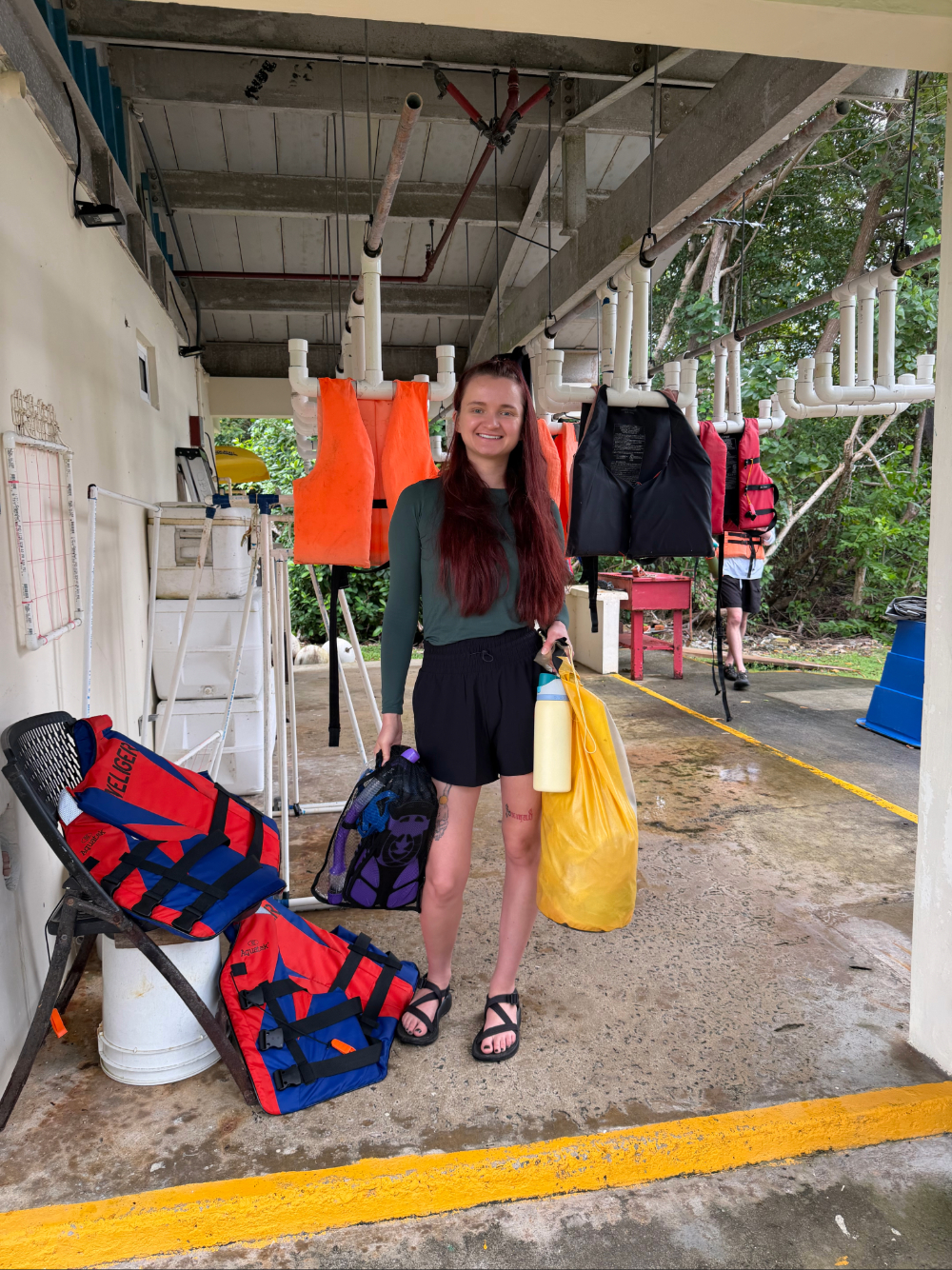 Prior to her career as a wildlife rehabilitator, she worked as a veterinary tech for eight years. In fact, her bachelor’s degree is in pre-veterinary science. She had hoped to go to vet school, but after working as a tech, she realized she needed something different. In her current role, she’s not only working to help animals, she’s also educating the public about the importance of conservation.
“A lot of what we do is community outreach, public programs with the animals, just helping the public understand why it is so important that we do the work behind the scenes to keep these animals protected and their habitats protected,” she adds.
Emily, who has always wanted to get her master’s degree, had also considered becoming a mortician.
“My family owns a cemetery, and I thought for a while I might want to be a mortician,” she said. “I did a little bit of online schooling for mortuary science. [But] I wasn’t learning anything. My professors were really hard to get in touch with.”
Emily found Biodiversity Conservation and Management after talking with a fellow volunteer coordinator at her nonprofit who was also looking for a master’s degree program. Now, she and Emily are both enrolled in the program – and so far, Emily has been pleased with her experience.
“I talk to my professors almost every day,” she says. “I still talk to the professors I went to Panama with, and they’re not even my professors. I’m actually learning. It’s not just like jumping through hoops, running through different steps. It’s like it’s a more comprehensive approach to the topic.”
While Biodiversity Conservation and Management is 100% online, Emily’s hands-on work with wildlife rehabilitation allows her to put what she’s learning in class right into practice.
“I’m going and doing educational programs with the public and with kids. And I’m going to schools. But I’m also drawing a lot of what I’m learning in my biodiversity classes on conservation design management, on public outreach. I’m drawing things from here, and I’m compiling it all together to move through the program.”
Emily, who hopes to graduate in 2027, plans on pursuing a PhD.
“A dream job would be trapping and collaring and monitoring bobcats,” she says. “Or banding raptors would be very, very cool. I like the more hands-on monitoring population stuff. That’s really where I feel like my interests lie.”
Not only is Emily working to rehab animals, she’s also raising a toddler while going to school. Fitting everything in is a challenge, but she’s learned a few tricks along the way.
“My husband–he’s an engineer–works all over the state. So a lot of times, I’m also solo parenting, which is really a lot to handle. My son goes to daycare three days a week. So I have Monday, Wednesday, Friday to do homework. I just keep the end goal in sight, I guess. And I ask for extensions. I ask for help when I need it. And I feel like I’m kind of shameless about just saying, hey, this is the position I’m in. I want this, but I literally only have 24 hours in the day. And I’m feeding baby squirrels every four hours, and I’m feeding a human child.”
“The asynchronous approach to the program has been really nice because I can sit down on a Monday and do a bunch of work and not worry about it for the rest of the week, until things are due. And then I tidy it up, tie a bow on it and turn it in.”
For Emily, one of the best things about the program is that conservation is all-encompassing.
“You could be a hardcore biologist and still relate conservation to that work somehow. Or you could not want anything to do with biology and still do conservation work because you just want to do public outreach, or you want to do continuing education.”
Some of Emily’s classmates don’t have a traditional science background, but that doesn’t preclude them from excelling in the program. In fact, the diversity is what makes it great.
“That’s my favorite thing about conservation. You could turn any discipline and you could relate it to conservation in any way. And I don’t think there are other majors or disciplines that are that way. It’s kind of like the social work of biology, I feel like. It’s like anybody can do it and not even know they’re doing it.”
Emily hopes to make it back to Barro Colorado Island one day, perhaps while she’s getting her PhD.
“I’m still learning Spanish because of that trip. I came home, and was like, ‘I’m going to learn Spanish.’ I would love to go back to BCI and study. It was a crazy experience. It was like a whirlwind. And [Panama] is a whole other world.”
Are you interested in learning how the Biodiversity Conservation and Management program can help you transition into a new career or enhance your current path? Contact an enrollment adviser today.